7/24/25

Pacu Jalur: A Spectacular Cultural Heritage from Riau

Aura Farming Trend 2025


Pacu Jalur is a traditional boat race originating from Kuantan Singingi Regency, in the province of Riau, Indonesia. More than just a competition, Pacu Jalur is a deeply rooted cultural heritage that blends sports, art, history, and spirituality, making it one of the most vibrant and unique cultural events in the Indonesian archipelago.

Historical Origins

Pacu Jalur dates back to the early 17th century. At first, jalur—long traditional wooden boats—were used for transportation along the Kuantan River. Over time, this practice evolved into a racing tradition held during Islamic holidays, royal celebrations, and welcoming important guests.

During the Dutch colonial period, Pacu Jalur began to take on a broader form as a public festival. Today, it is held annually in August to commemorate Indonesia's Independence Day, and it has become part of the national tourism calendar.

Philosophical and Social Values

Pacu Jalur is not just about speed on the water. It reflects values of unity, teamwork, discipline, and sportsmanship. Each boat can carry 40 to 60 rowers, and their success depends on harmony, rhythm, and collective strength.

Socially, Pacu Jalur serves as a community event. Each jalur represents a village or a group of people who prepare months in advance—crafting or restoring their boat, training the crew, and decorating the vessel with traditional Kuansing motifs.

The Uniqueness of Jalur Boats

A jalur is a long traditional boat, often reaching 25 to 40 meters in length, carved from a single large tree (usually meranti or fig wood). The boats are beautifully decorated with colorful ornaments, dragon heads, and intricate Malay carvings.

Every part of the tradition—from crafting the boats and performing rituals to the race itself—is steeped in sacred meanings and rich local culture.

Pacu Jalur Festival

The main event is held at Tepian Narosa in Teluk Kuantan City. Thousands of spectators, both locals and tourists, line the riverbanks to witness the thrilling races. The festival also features traditional Malay music and dance performances, local food bazaars, and a parade of boats.

Pacu Jalur has been recognized by Indonesia’s Ministry of Education and Culture as an Intangible Cultural Heritage, highlighting its importance in the preservation of local traditions amid modern change.

Pacu Jalur is more than a boat race—it is a symbol of pride, identity, and communal spirit for the people of Kuantan Singingi. It reminds us that culture is not just a legacy of the past but a living force that continues to unite and inspire communities today. (Syerif Nurhakim)

6/16/23

5 types of water that are good for watering plants

Here are some types of water that you can use for watering. 

1.      Rainwater: Rainwater is the best choice for watering plants. This is because rainwater contains natural nutrients and is free from chemicals that may be present in tap water.

2.      Well water: If you have a well, clean and chemical-free well water can be a good option for watering plants.

3.      Spring water: Fresh and natural spring water is also a good source of water for watering plants. This water is generally free from chemicals and rich in minerals.

4.      Condensation water: If you use a cooler or air conditioning, you can use the condensation water for watering plants. Just make sure not to use water that contains chemicals like antifreeze.

5.      Shallow well water: Clean and uncontaminated water from a shallow well can be used for watering plants. However, make sure to test it and ensure that the water is safe to use.

Avoid using water that contains chemicals, such as chlorinated tap water or contaminated water. Good water for plants should be free from additional chemicals and contain natural nutrients.

10 Ornamental Plants Suitable for Growing in the Dry Season

Here are the most suitable ornamental plants for the dry season. Some of them may require specific care:
  1. Cactus: Cacti are an excellent choice for the dry season as they can withstand drought conditions and require minimal watering.
  2. Mother-in-law's Tongue (Sansevieria): Mother-in-law's tongue plants have thick leaves and are drought-tolerant. They can thrive in low water conditions and require minimal care.
  3. Aglaonema: Aglaonema plants are drought-tolerant and can adapt well to indoor environments with minimal sunlight exposure.
  4. ZZ Plant (Zamioculcas zamiifolia): ZZ plants are popular ornamental plants that are drought-tolerant and require minimal watering.
  5. Bougainvillea: Bougainvillea is a climbing plant that is drought-tolerant and displays beautiful flowers in various colors.
  6. Lavender: Lavender is a drought-tolerant plant with a fragrant aroma. It grows well in hot and dry weather conditions.
  7. Aloe Vera: Aloe vera plants have succulent leaves that store water, allowing them to survive in drought conditions.
  8. Hibiscus: Hibiscus plants are drought-tolerant and feature beautiful flowers. They can also thrive in areas with strong sunlight.
  9. Sunflower: Sunflowers are drought-tolerant plants that require ample sunlight exposure.
  10. Rosemary: Rosemary is a fragrant shrub that is drought-tolerant. It can also be used as a culinary herb.
Ensure proper care such as adequate watering and appropriate placement to ensure the health and growth of these plants during the dry season.


10 Tips for Caring for Fruit Plants in Pots

Here are 10 tips for caring for fruit plants in pots:

1.      Proper pot selection: Choose a sufficiently large pot with good drainage holes to ensure that the soil does not become waterlogged and the roots have room to grow.

2.      Good potting mix: Use a high-quality potting mix that is rich in nutrients and has good drainage capabilities. Mix garden soil, compost, and sand to create an ideal growing medium.

3.      Proper watering: Provide regular watering, but avoid overwatering, which can lead to root rot. Check the moisture level of the soil by touching it before watering again.

4.      Regular fertilization: Provide organic fertilizer or specialized fruit plant fertilizer regularly to provide adequate nutrition. Follow the recommended fertilization instructions for the specific type of fruit plant you are growing.

5.      Adequate sunlight: Place the pot in a location that receives direct sunlight for at least six hours a day. Fruit plants require sufficient sunlight for healthy growth and fruitful flowering.

6.      Protection from pests and insects: Monitor for signs of pest or disease infestation on the plants. Use organic insecticides or natural pest control methods to protect the plants from damaging insects.

7.      Pruning: Perform regular pruning to maintain the shape and growth of the plants. Remove any damaged or dead branches to stimulate new growth.

8.      Support for climbing plants: If your fruit plant is a climber, provide support such as wire or bamboo stakes to keep the plant upright and prevent damage from heavy fruits.

9.      Weed control: Maintain pot cleanliness by removing any weeds that grow around it. Weeds can compete with fruit plants for nutrients and water.

10.   Regular monitoring and care: Pay attention to signs of nutrient deficiencies, diseases, or other issues with the plants. Provide necessary care such as additional fertilization or soil replacement when needed.

Make sure to understand the specific needs of the fruit plants you are growing and adjust the care accordingly.

11/8/21

Growing a Fruit Tree on Pot


The hobby of planting is very popular with many people, one of which is fruit plants. However, for some people, for reasons of not having enough area, the idea arose to develop plants in pots or commonly known as Fruit plants in pots. After being introduced for a long time, now the Fruit plants in pots hobby remains a favorite for plant lovers. Because besides being able to eat the fruit, this plant is able to beautify the surrounding environment. Even for people who have narrow land though, Fruit plants in pots can be fruitful. Fruit plants in pots, especially in urban areas, is part of the ornament of beauty and greenery. 


The presence of Fruit plants in pots becomes a refreshing oasis in the midst of the city's never-ending development. On the sidelines of space and buildings, urban residents are now starting to organize and complete their environment with pots of various sizes. Various plants, especially fruit trees adorn the corners of the city. 


The minimalist garden also bears sweet fruit. However, not a few people who do not know more about the technique of planting Fruit plants in pots. What is needed so that Fruit plants in pots bears fruit quickly and not just as a reforestation ornament? Well, this book will explore what problems and information about Fruit plants in pots we need to know. One of them explores how to prepare a good Fruit plants in pots media. 


What are the steps needed to take care of our beloved Fruit plants in pots. Not only that, this book also looks at the current Fruit plants in pots business prospects and opportunities. What are the opportunities that can be obtained from developing Fruit plants in pots plants? Well, let us reveal what are the steps as well as strategies to develop Fruit plants in pots as a profitable business.

8/27/19

HOW TO PROPAGATE AN OLIVE

Olive plant is one of the plants mentioned in the Qur’an. Because of its privilege, many people are looking for this plant to be planted, even by spending quite a bit. During this time, olive trees are still planted by plant hobbyists in homes. The number of those who pursue it is still one of the reasons for the lack of knowledge of the cultivation of these plants. Some of them see that there is an exotic side to the olive tree which is known to the world as a symbol of the peace tree. Olive tree seeds of 50-60 cm in size are sold for Rp600,000 to Rp800,000, - this is an attraction for Indonesian farmers to develop.


Increase olives with graft techniques
This method is one safe way to do, but the right technique must be applied properly. Olives, which are 'desert' plants, must be able to adapt to Indonesia's climate and weather. The most appropriate graft media is without using soil. Soil tends to dry easily and is easily dense. The most acceptable media currently is the use of cocopeat (coconut fiber powder) which has ideal humidity for growing graft roots. This can also be applied with moss media (forest moss) which has the same character as cocopeat. One recipe to note is that you don't need to wait for the graft to be filled with roots. You just have to wait for one or two roots to come out, the graft can be cut immediately and then transferred to a polybag. After that, the plants are stored in the shade by providing the necessary vitamins and root hormones. Of course according to the right dose. This method is a way to avoid growing failures that are usually experienced by beginners, such as grafted stems that die dry due to stress conditions post graft. The success of this grafting technique is generally around 80-90%.

Graft Stages:

  1. Prepare a wet coco peat with no water dripping conditions when kneading.
  2. Prepare ice plastic (PE plastic) or you can also use fruit wrapping as a protective layer of rainwater.
  3. The olive tree's trunk should be at least the size of a pencil stem (bigger is better). Simply 5 cm wide. then scrap the cambium until there is nothing left in the transplants cut area. Apply enough root-up in the area of ​​the wound.
  4. Cover the transplants cut before with coco peat media then add root vitamins.
  5. Wait for 2-3 months, the roots begin to grow. Root growth time can also be longer than this due to several factors. For example media, that is dry or exposed to pests.
  6. If you have started to see a root growing one or two, you can already cut it in the afternoon.
  7. Then remove the plastic that is still attached. Soak the graft in Atonic liquid and B1 or the like to help growth.
  8. The cut graft is planted in polybag with a mixture of fuel husk and raw husk, soil, sea sand, and manure in a ratio of 3: 3: 2: 2. Sea sand is used following olive habitat that grows in areas near the Mediterranean coast. At the polybag, the grafted seedlings were sprayed with vitamin B1 so that it would not be stressed and placed in the shade for 40 days. While in the shade, the seeds are watered with Atonic and B1 solutions every 2 days.

Propagating by shoot cuttings
In addition to grafting, propagation by cuttings technique can also be done. However, this one method requires handling quite 'troublesome' because you must always pay attention to the humidity of cuttings when in the nursery media. Generally, the success of this method is only around 40-50-%. But it doesn't hurt if you try it first.

Cuttings Stages:
  1. Prepare wet cocopeat media
  2. Fine sand (sieving results)
  3. Plastic tray for media holder
  4. The way the olive shoots are taper 12-12 cm long. The lower leaves are removed and 6 leaves are left at the top. The remaining leaves are trimmed edges to reduce evaporation. Next, the shoot pieces were immersed in a root-stimulating solution for 1 hour and planted in cocopeat media. Then, the plant is covered with plastic and placed in the shade.
  5. After the roots begin to appear and new shoots appear plants can be moved to polybags in the shade of heat and rain. Wait until the plants are completely ready. Happy gardening! Let to grow olives in your home. It may be useful (Nanang Hanif)
 

8/26/19

8 DANGER SLEEP IN THE MORNING

Talk about physical health can not be separated from this one thing. Namely, sleep. Sleep is everyone's need. But there is one sleep habit that you should leave now. Is that? Sleep in the morning. Namely sleep the morning before 11:00 noon. This habit is quite dangerous because it can interfere with your health.

1. Disorders of the Metabolism of the Body, According to health experts, the habit of sleeping early in the morning after staying up all night (because of patrolling or watching the ball) can cause metabolic disorders. In the morning when the body should receive energy intake from food through the breakfast routine, the body sleeps. This can disrupt the body's metabolic system so that it experiences an imbalance. This can continually result in obesity and overweight problems.

2. Overweight Body, the Overweight factor said earlier is one of the effects of sleep habits in the morning. Obesity or obesity can be the forerunner to other dangers arising because the risk carried by obese people is higher than those with ideal body weight. Especially the risks that usually threaten children at a young age.

3. Sluggish and Lustful Body. Sleeping habits in the morning significantly affect your body's fitness. Usually, the body will suddenly lethargic and not excited about carrying out daily activities. This happens because the energy in the body cannot be managed properly due to metabolism in the body that is disturbed.

4. Headaches. The effect of times felt after sleeping in the morning is a headache which is usually quite annoying. This is caused by cerebrospinal fluid flowing into the brain, causing unbearable headaches. This pain can even be felt all day and very disturbing your important activities.

5. Triggers Diabetes. This diabetes occurs when the body has difficulty controlling blood sugar due to the disrupted metabolic effects. This is often not realized by young children. But when the blood test results show positive diabetes, you start looking for the cause of the problem. For those who have diabetes, it will also cause the body to become drowsy, especially in the morning. This is caused by low insulin production which makes the body unable to convert glucose or blood sugar into energy. The body that has no energy will naturally be lethargic and sleepy, including in the morning.

6. Risk of Heart Disease. Heart disease, according to a study published in the journal titled Nurses Health Study, was carried out involving 72 thousand women. The results of this study are, if women sleep too long or are accustomed to doing it until the morning, then the risk for heart disease can increase up to 38 percent higher. Metabolic disorders are suspected to have a significant effect on heart and blood vessel health. Well, this is the data obtained from research on women. However, for men, this can also be the same. Surely this will not happen if you begin to pay attention to a healthy lifestyle continuously.

7. Depression. Physically and psychologically, people who often stay up late at night have special characteristics that are easily seen. If physically can be seen from obesity or obesity then psychologically will appear in some disorders such as depression, irritability, and several other mental disorders. This can lead to more serious health hazards sooner or later.

8. Anemia. The disruption that you can experience if you sleep in the morning is anemia. Anemia not only causes the body to become lethargic but can also affect the condition of your organs and other tissues massively and thoroughly.

From now on let us avoid the bad habit of sleeping in the morning. The trick is to ensure adequate and quality night sleep. This means we pay attention to healthy sleep patterns that are recommended by doctors and other health experts. It may be useful. (Nanang Hanif)

2/22/19

Gardening for planting grass

Every  morning, all of cats will at home guarding the garden. If so, there is no need for human labor anymore. Is it true? Yes, but I planted my garden for mice. As well as grass. How hard you throw it from your garden. Tomorrow the grass will grow again. If so try planting grass, what will it grow?

2/20/19

Easy Ways to Make Compost in Your Garden

 Let us manage to reach us wisely. In order for a healthy environment and we can get benefits from compost. in addition to fertilizing plants also a decent income.

Some common misconceptions about composting at home are that it's too complicated, smelly, and it's messy. This is all true if you make compost the wrong way. Composting the right way is a very simple approach: Enough layers of organic matter and a pinch of soil to make a mixture that turns into topsoil (the best soil builder around!). You can then increase your flower garden with compost, dress up on your yard, feed your growing vegetables, and more.
Type of Composting
Before it starts to accumulate, recognize that there are two types of composting: cold and hot. Cold composting is as easy as collecting yard waste or removing organic material in your trash can.

Hot composting is for more serious gardeners but a faster process - you will get compost in one to three months during warm weather. Four composts for hot compost are needed: nitrogen, carbon, air, and water. Together, these items feed microorganisms, which accelerate the decay process.


Vermicompost is made by composting worms. When worms eat the rest of your food, they release castings, which are rich in nitrogen. You can't use any old worms for this - you need redworms (also called "red wigglers"). Worms for composting can be purchased cheaply online or at a garden supplier.

With these simple steps on how to make compost, you will have all the bragging rights about the pro!


What should be composted?

Composting is a great way to use items in your fridge that you don't get, thus eliminating waste. Store containers in your kitchen, such as buckets or jars, to collect your compost material. If you don't want to buy it, you can make homemade compost bins inside or outside the room. Collect these ingredients to start your compost pile correctly:

Leftover fruit
Remaining vegetables
Pieces of grass and plants
Dried leaves
Wood chips and finely cut bark
The newspaper was torn
Straw
Wood powder from unprocessed wood

Not only will these items not work well in your garden, but they can also make your compost smell and attract animals and pests. Avoid these items for successful compost piles:

Anything that contains meat, oil, fat or oil
Material of sick plants
Sawdust or debris from wood that is treated with pressure
Dog or cat feces
Weeds that lead to the seeds
Dairy products

Mix Green and Brown Ingredients

To make your own hot compost pile, wait until you have enough ingredients to make a stack of at least 3 feet. You will want to combine your wet, green items with your dry, brown items. Start building your organic compost pile, alternating brown and green items. If your compost pile looks too wet and smelly, add more chocolate items. If you see it very brown and dry, add a green object and the water to be slightly moist.

Flush Your Water Pile

Sprinkle the water on top of the pile regularly so that it has the consistency of a wet sponge. Don't add too much water, otherwise the microorganisms in your pile will be flooded and sink. If this happens, your stack will rot, not compost. Monitor the temperature of your stack with a thermometer to make sure the ingredients are decomposed properly. Or, just reach the center of the stack with your hands. Your compost pile will feel warm.


Stir Your Pile

During the growing season, you must provide a pile with oxygen by turning it once a week with a garden fork. The best time to reverse compost is when the center of the stack feels warm or when the thermometer sounds between 130 and 150 degrees F. Stirring the stack will help him cook faster and prevent the material from becoming tangled and causing odor. At this point, the layers have served their purpose to create the same amount of green and brown material throughout the stack, so stir until smooth. if you do it right you will produce good compost and fertilize your plants.

11/11/14

How to Care Your Fig Tree

This is my green garden. My figs tree thrives in a narrow land. This Fruit has many benefits for health.


The most important factor that must be done after planting tin is to care for it to produce the fruit we want. Good figs are usually produced from plants that grow healthy. How do we recognize the healthy fig tree? Let's look at this article thoroughly.

Healthy figs generally have perfect leaves and branches. Green bars and smooth seamless dun. Maintenance of tin is not enough to just water it. But there are several treatments that need to be done for the sake of the tree's survival. One of them is by pruning (pruning) and eliminating plant pests / disruptors.

Figs generally experience fig rusts. This disease arises from several factors that may occur including the surrounding environment that is too moist. Environmental conditions that are too moist can cause the emergence of Cerotelium fici pathogens. This disease usually appears more frequently in the rainy season. As a result, figs experience rusty leaves to fall prematurely.
Initial symptoms usually you see black dots on the surface of the leaf. It then spreads to the wider leaf area. the leaves turn reddish brown, turn yellow, then fall out. If attacking fruit can cause fruit to fall before ripe.

Tips and Countermeasures:

Every farmer may have tips and methods that are different from the following methods. But it's not wrong if you try this method to solve the problem in your favorite fig tree. Here are the efforts you can take, including:

 1. Make translucent plastic roof / Make Green House. The easiest control effort to prevent the attack of leaf rust is to ensure that the fig leaves are not exposed to water, both water and rainwater. You can install shade / shade on it.

  2. Water the plants. Watering should be directed directly to the roots of the plant. It is not recommended to use a sprinkler to water the figs.

3. Choose the right watering time. The best watering time is 9am. Avoid watering the fig plants again in the afternoon because it can cause moist conditions at night.

4. Regulates air circulation. Adjust air circulation in the planting area. Make sure the surrounding air can move smoothly so that the humidity level can decrease.

5. Balanced and dosage fertilization. Give fertilizer to the fig plants appropriately and balanced. Fertilizers that contain lots of calcium (Ca) are known to increase the resistance of plants from leaf rust.

6. Maintain the condition of the plant area. Slaughter conditions as good as possible. Clean trash, weeds, and other remaining plants so that the surrounding environment is not moist.

7. Prunning. Pruning plants regularly. Immediately it may destroy parts of the plant that have contracted leaf rust so as not to spread to other parts.Trimming the tin branches is best done after the fruit harvest.

8. Maybe you can also use fungicides to eradicate pathogens that cause leaf rust. Use a fungicide containing copper sulphate. May be useful :)


#figTree
#ediblefig
#fruit
#green

9/9/14

Black Scorpion

The black scorpion in to my house at night. I swiftly cought and insert to plastic jar. But I don't know, what the kind of scorpion. Maybe you can explaind it to me.
black scorpion
What kind of this scorpion?

9/18/13

NO NAME FRUIT


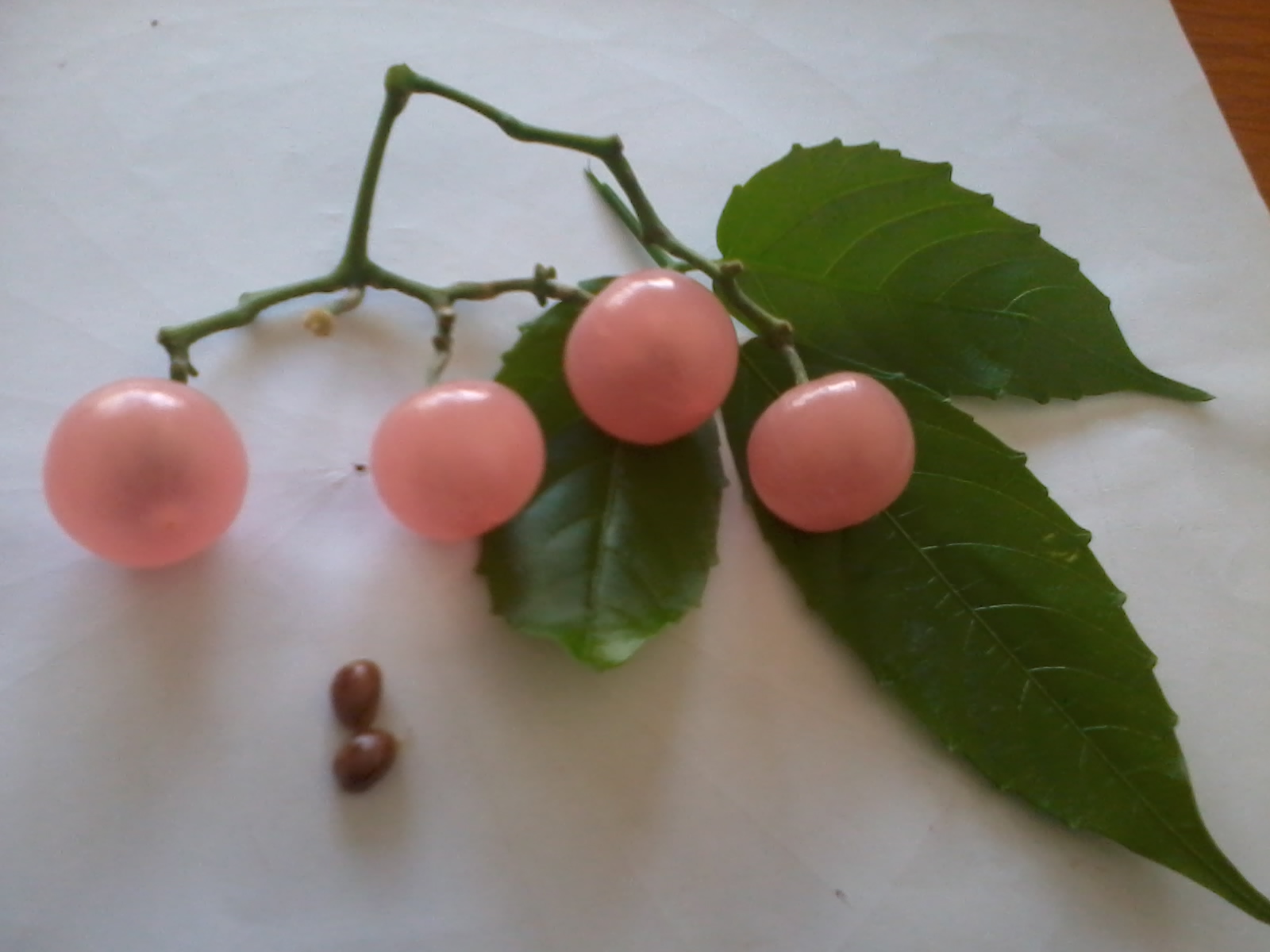
I have one question unanswered. I find this fruit has the color pink. At first glance, this looks like a grapefruit. Can I eat it? What is the name of this fruit? Is this kind of grapes? But, it seems it's not a grape. The smell and the texture are different. Not sweet like grapes. I suspect this poisonous fruit. What do you think? Please, explain what the name of this fruitPlease help me and share information with me. Thank you so much.